Focused Shockwave Therapy in St. Augustine, FL
Focused shockwave therapy uses sound waves to deliver energy to injured tissue and help it heal. It is non-invasive, needs no needles or drugs, and is used for stubborn tendon and soft-tissue pain like plantar fasciitis and tennis elbow. Back in Motion in St. Augustine uses the PiezoWave2T focused shockwave device.
What shockwave therapy is
Shockwave therapy is noninvasive and, in Mayo Clinic’s words, “uses sound waves to transmit energy to tissues to help with the healing process” (Mayo Clinic News Network). It is used for chronic tendon and soft-tissue problems where healing has stalled.
At Back in Motion, shockwave is one tool in a plan. For disc and spine cases we pair it with decompression and Class IV laser; for heel, elbow and shoulder tendon pain it is often the main treatment, with exercises to support it.
Focused vs. radial shockwave
There are two kinds of shockwave devices. Many clinics carry radial. We chose focused.
| Focused (what we use) | Radial | |
|---|---|---|
| How the energy travels | In a narrow, concentrated pattern to a set depth | Spreads out widely from the surface |
| Depth | Can be aimed at deeper tissue | Strongest at the surface, reaching about 4 to 5 cm |
| Best suited to | A precise spot: a tendon insertion, deep soft tissue near the spine | Broader, more superficial areas |
Focused vs. radial definitions per Mayo Clinic (Mayo Clinic, 2022).
We chose focused because it lets Dr. Colby place the energy exactly where the problem is, including deeper tissue that radial devices reach less well. Our device is the PiezoWave2T, made by Richard Wolf GmbH.
What we treat with shockwave
Mayo Clinic lists these among the conditions shockwave is used for (Mayo Clinic, 2022):
- Plantar fasciitis: heel pain, worst with the first steps in the morning.
- Tennis elbow: pain on the outside of the elbow with gripping.
- Achilles tendinopathy: pain and stiffness in the back of the heel.
- Patellar tendinopathy: pain just below the kneecap.
- Hamstring tendinopathy: deep pain where you sit.
- Shoulder tendinopathy: rotator cuff pain, including calcific tendinitis.
- Hip bursa pain: pain on the outside of the hip.
- Shin splints: pain along the inside of the shin.
We also use it as part of disc herniation care.
What a session feels like
You will feel a rhythmic tapping at the treatment spot. It can be uncomfortable over the sorest point, and the intensity is adjusted to what you can tolerate. There is no downtime; most people go straight back to normal activity.
Typical course: three to six sessions, three to seven days apart, with results building for weeks after the last one (Mayo Clinic News Network).
TODO PETE Confirm with client: session length in minutes, and the number of sessions Dr. Colby typically recommends.
How much should shockwave therapy cost?
Shockwave is usually paid out of pocket and priced per session, so the total depends on how many sessions you need. At Back in Motion you get the per-session price and the expected number of sessions before you start.
TODO PETE Get the per-session price (or package price) from the client. “How much” is the question Google shows, so a real number makes this page much stronger.
Is there a downside to shockwave therapy?
Side effects are usually mild: brief discomfort during treatment, skin redness, and slight bruising or swelling. The bigger downsides are that results build slowly over weeks, it is not right for everyone, and most insurance does not cover it.
Side-effect details are from Mayo Clinic (Mayo Clinic News Network)(Mayo Clinic).
- Pregnancy
- A blood-clotting disorder
- A tumor or infection in the treatment area
- A steroid injection in that area within the last six weeks
Contraindications per Mayo Clinic (Mayo Clinic, 2022).
Does insurance pay for shockwave therapy?
Usually not. Mayo Clinic notes that shockwave therapy is not covered by most insurance plans. At Back in Motion it is offered as self-pay, with the price given up front.
If you were hurt in a car accident and shockwave is part of your accident care plan, ask us how it fits with your PIP coverage. See Florida PIP explained.
Does shockwave therapy for plantar fasciitis really work?
Plantar fasciitis is one of the best-studied uses. Shockwave devices are FDA approved for plantar fasciitis and tennis elbow, and Mayo Clinic describes it as an option for heel pain that has not improved with other care. Full effects can take 10 to 15 weeks after the last treatment.
Mayo Clinic says treatment is usually three to six sessions spaced three to seven days apart (Mayo Clinic News Network). That is also the honest answer to “how many sessions for plantar fasciitis”: typically three to six, with Dr. Colby setting your number after the exam.
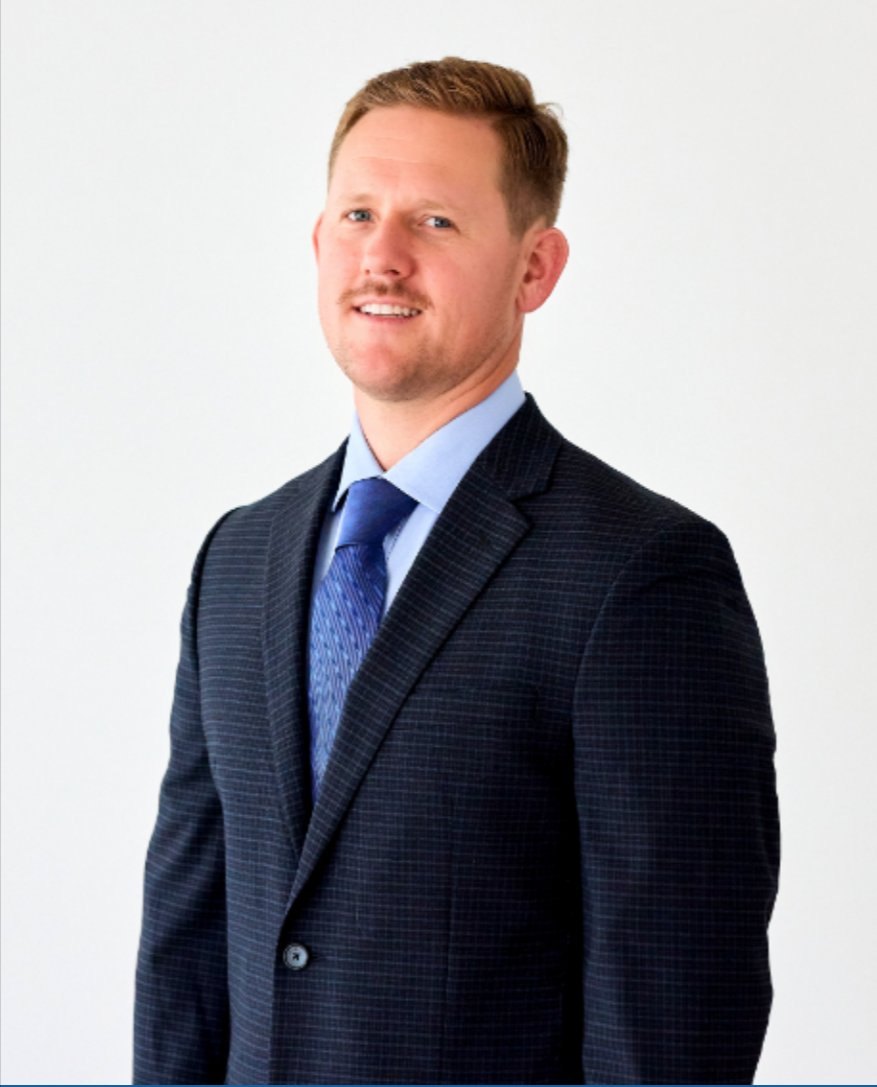
Dr. Colby Caltrider, D.C.
Palmer College graduate · OwnerDr. Colby chose focused shockwave so he can place the energy exactly where the problem is. He tells you whether you are a good candidate, and the price, before you start.
When someone walks in here in pain, my job isn't to sell them a package. My job is to figure out what's going on and get them moving again. That's it.
Heel, elbow or tendon pain that won't heal?
Book a consult. Dr. Colby will tell you whether shockwave is a good fit, how many sessions to expect, and the price, before you start.