Pain doesn't come with a label telling you what went wrong after a crash. When you seek auto injury treatment in St. Augustine, a physical exam helps uncover where the trouble may be coming from. Chiropractors look beyond the areas that hurt to get a better picture of how the accident affected your body.
Different injuries call for different types of testing, and symptoms alone don't always tell the full story. Back In Motion uses physical exams to better understand your condition and determine what care makes sense. Each test serves a purpose, helping chiropractors spot possible problems that deserve closer attention.
Knowing what happens during these exams makes it easier to understand how chiropractors assess accident injuries.
Here are the physical tests chiropractors use to identify injuries following a car accident.
Uneven Shoulders Can Reveal More Than Poor Posture
Your body may shift to ease pain after a crash. Chiropractors check how your head, shoulders, and hips line up to spot changes in your posture.
Raised Shoulders May Point to Muscle Tension
Neck injuries can cause muscle tightness after an accident. You might hold one shoulder higher to avoid discomfort. A chiropractor can check for tight muscles and painful spots.
Uneven Hips Can Change How You Stand
Back or hip pain may cause you to favor one leg. This can shift your weight and make your hips look uneven. Watching how you stand helps reveal which side carries more weight.
Head Position Can Show Signs of Neck Strain
A sore neck may cause you to hold your head at an odd angle. Turning your head could also feel harder on one side. Checking these changes helps a chiropractor decide which neck movements need further testing.
Standing Symmetry Reference
What Chiropractors May Observe During a Standing Posture Check
Watch the reference points appear on a simplified standing model. The illustration shows locations that may be compared during a professional examination.
These illustrations show simplified observations that may be part of a professional examination. They do not diagnose injuries, measure your posture or walking pattern, or replace medical evaluation.
This illustration identifies five paired anatomical reference areas on a neutral standing model: the ears, shoulders, hips, knees, and feet, along with a vertical standing reference line.
Stage Neutral Standing Illustration
- Now showingStanding Reference: A clinician may begin by observing how different regions of the body are positioned while a person stands.
- Now showingEar Position: The position of the head and ears can contribute to an overall observation of how someone is holding their head.
- Now showingShoulder Level: A clinician may compare shoulder height and resting position while considering other examination findings.
- Now showingHip and Pelvic Position: Hip and pelvic positioning may provide another observation about how a person stands and distributes weight.
- Now showingKnee Position: Knee positioning can be considered alongside the hips and feet when viewing the body as a connected system.
- Now showingFoot Placement: Foot position and the standing base can add context to observations of the legs, hips, and upper body.
- Now showingAll Five Landmarks: Ears, shoulders, hips, knees, and feet are shown together so they can be compared as one standing picture.
What Standing Reference Points Can Show
A standing posture check may involve comparing several body landmarks rather than looking at one shoulder, hip, or joint in isolation. Visible differences provide observations that a clinician can consider alongside symptoms, medical history, and other examination findings.
This is a simplified educational illustration. Body positions vary naturally, and visible left-to-right differences do not by themselves diagnose an injury or establish its cause.
Neck Movement Tests Expose Whiplash Restrictions
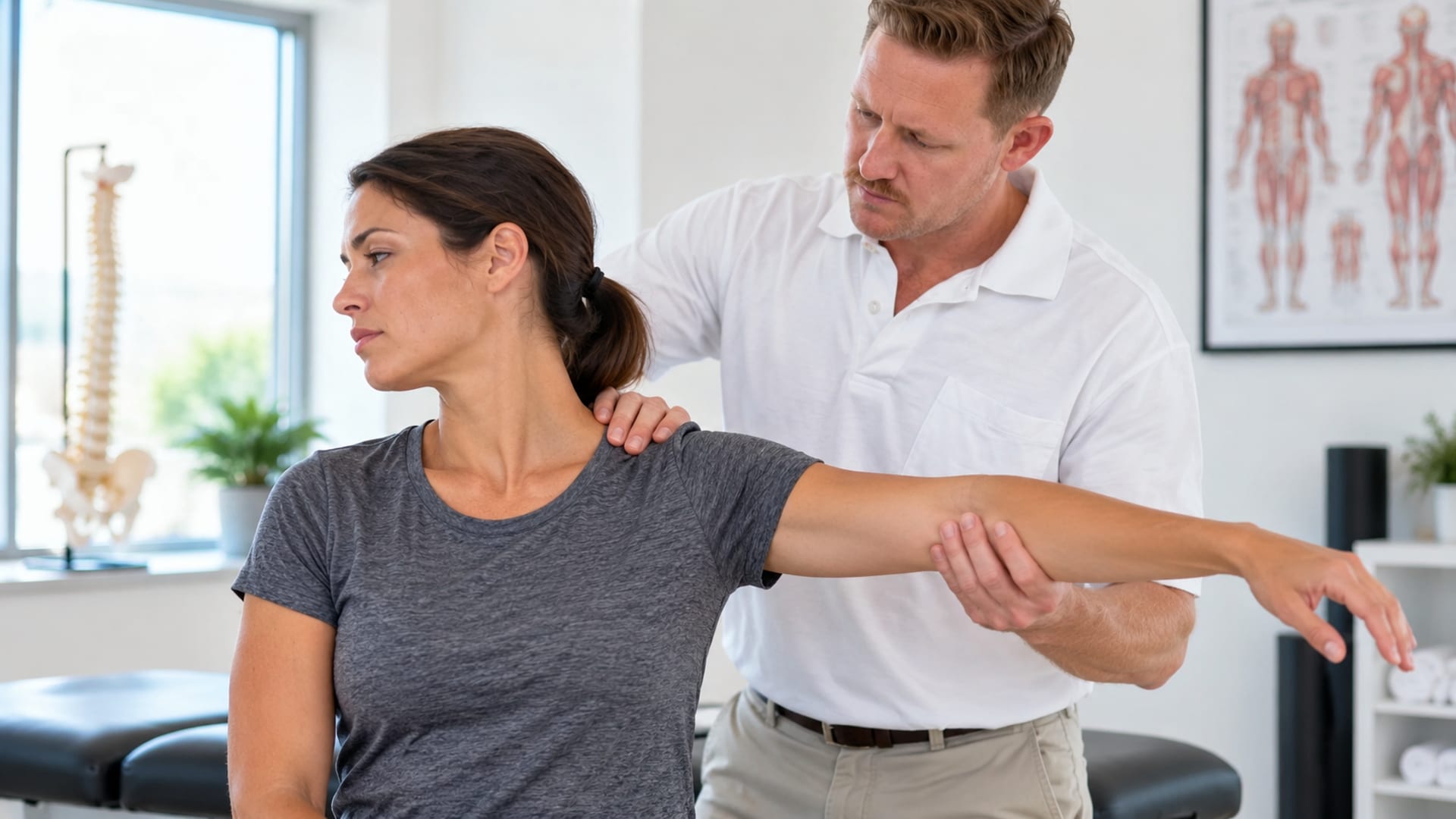
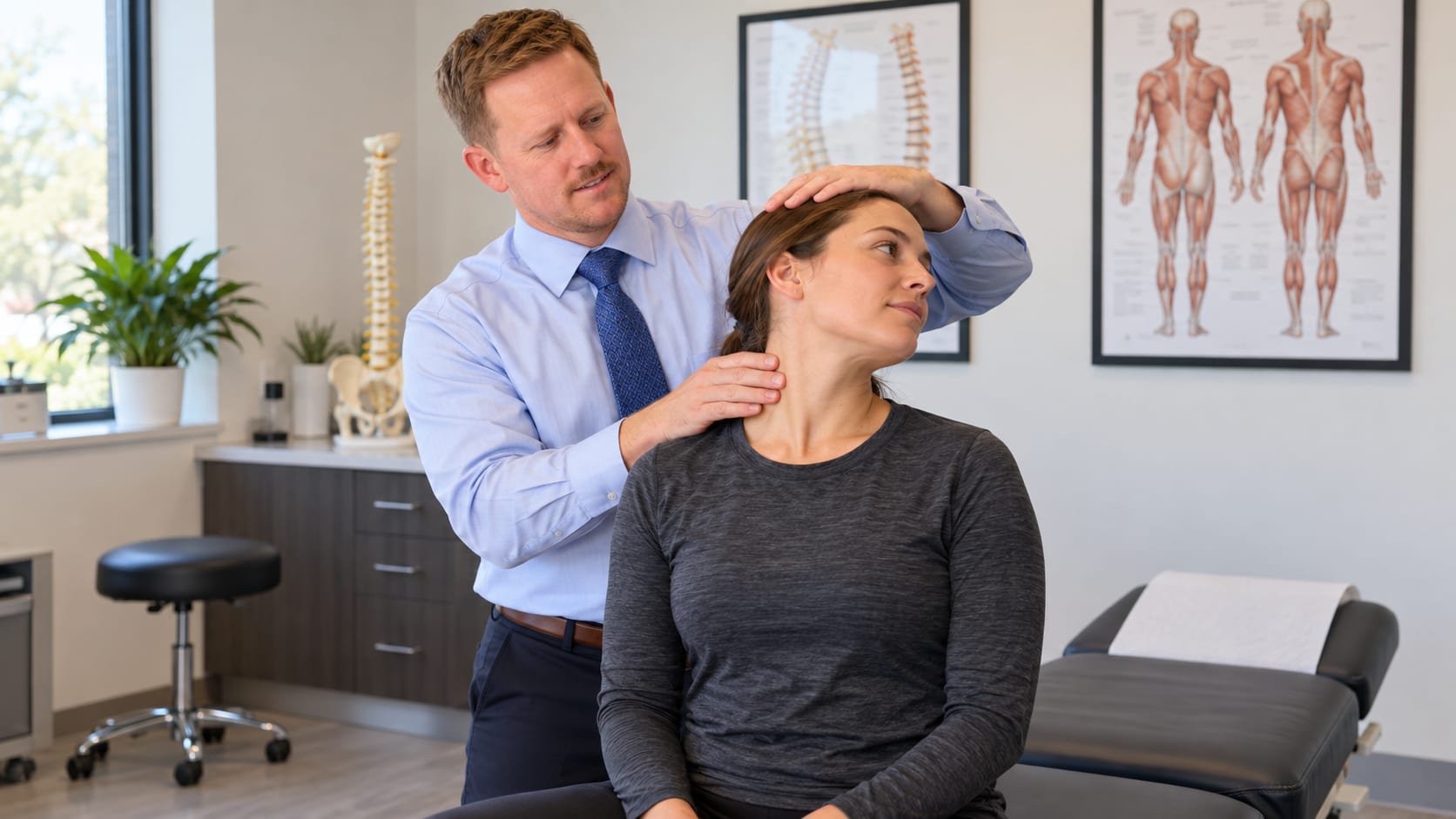
Turning your head after a crash may feel harder than before. Whiplash can limit how far your neck moves in each direction. Chiropractors check these movements to find areas that cause pain or stiffness.
Looking over your shoulder or tilting your head may cause discomfort. During auto injury treatment in St. Augustine, neck movement tests help measure these limits. The results help chiropractors understand which movements need more attention during care.
Finding the Pain That Hides Along Your Spine
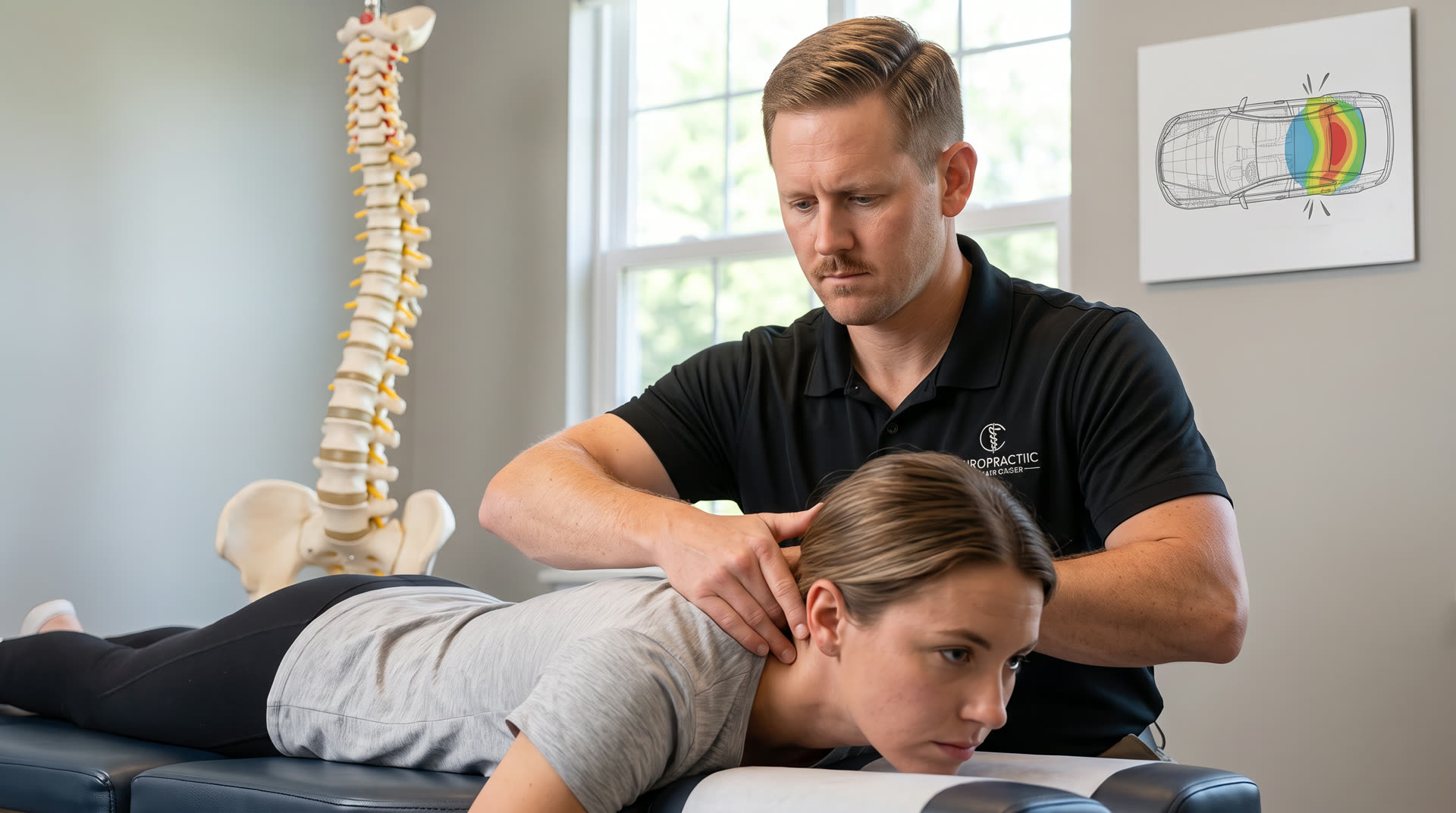
A sore back can make it hard to tell where the pain starts. Chiropractors use gentle pressure to check the muscles and joints along your spine. This hands-on exam helps them find tight spots and areas that hurt when touched.
Some muscles may feel stiff while nearby areas feel normal. Pressing along the back lets the chiropractor compare how each spot responds. These findings can guide further tests to learn which tissues may have suffered damage during the crash.
Can a Straight Leg Raise Test Reveal a Herniated Disc?
Pain shooting down your leg may point to an irritated nerve. A straight leg raise test can help check for this problem. The test may show signs of a disc injury, but it cannot confirm one alone.
Back In Motion uses this test to check for nerve pain. You'll lie on your back as the chiropractor lifts your leg. Pain traveling down the leg may signal nerve trouble that needs further testing.
Your Reflexes Could Reveal a Hidden Nerve Problem
Nerve damage can change how your body reacts after a crash. A chiropractor taps certain tendons with a small rubber hammer. These taps test how your nerves send signals to your muscles.
The way your body responds can reveal these warning signs:
- Knee Reflexes May React Differently: A light tap below your kneecap should make your lower leg move. A weak response may point to nerve trouble in your lower back.
- Ankle Reflexes Can Show Nerve Changes: Tapping the tendon behind your ankle should cause your foot to move. Little or no movement may suggest a problem with certain lower back nerves.
- Elbow Reflexes Help Check Arm Nerves: A tap near your elbow can cause a small arm movement. Weak reactions may suggest nerve trouble in your neck or arm.
- Uneven Responses Need a Closer Look: Your left and right sides should have similar reflexes. During auto injury treatment in St. Augustine, these differences can help guide further nerve testing.
Reflex changes do not always mean nerve damage, but they can show where more testing is needed.
The Way You Walk May Expose an Overlooked Injury
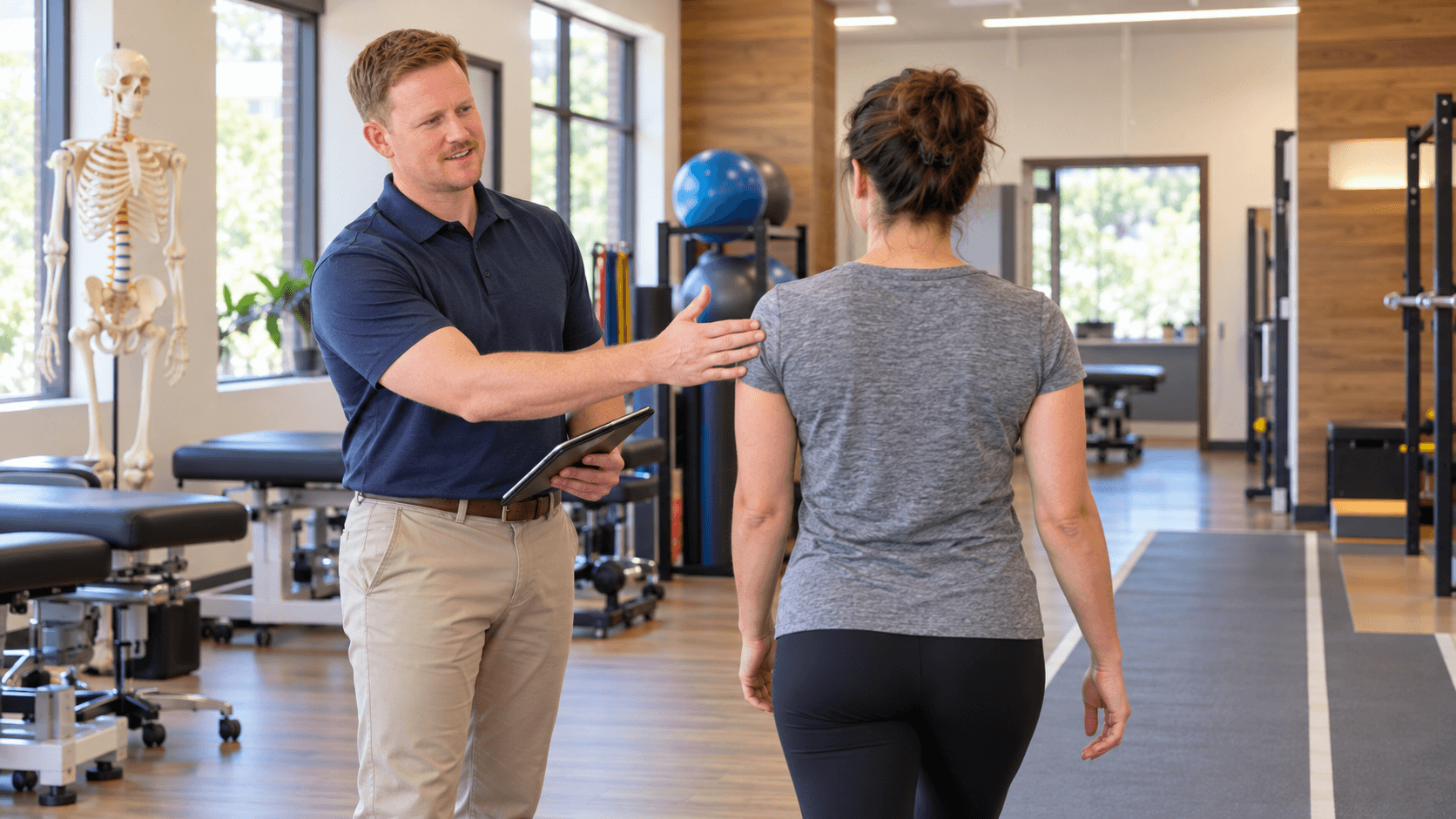
Your walking pattern can change after a car accident. Pain may cause you to limp or take shorter steps. Watching you walk helps chiropractors spot problems that may go unnoticed during other tests.
Uneven steps can place extra strain on your hips and back. A chiropractor checks your foot placement, pace, and how you shift your weight. These changes may point to muscle, joint, or nerve problems that need further testing.
Weight-Shift Footprint Trail
How Weight Distribution Can Appear During Walking
Watch a simplified footprint sequence to see how different loading patterns may be represented during walking.
This illustration shows eight alternating left and right footprints along a walking path. The first four steps use a plain outline. From step five on, right footprints use dense hatching to represent an example of more loading, and left footprints use sparse hatching with a dashed outline to represent an example of less loading.
Illustrative Walking Path
- Plain outline: neutral step
- Dense hatching, solid outline: Example: More Loading
- Sparse hatching, dashed outline: Example: Less Loading
Stage Illustrative Walking Path
- Now showingFirst Step: Walking involves repeated contact between the feet and the ground.
- Now showingAlternating Foot Placement: A clinician may observe how a person places each foot and shifts weight while walking.
- Now showingExample: More Loading / Example: Less Loading: The illustration uses contrasting patterns to represent a possible difference in how weight is distributed between steps.
- Now showingPattern Across Several Steps: Repeated observations can help a clinician notice whether a walking pattern appears uneven or changes from step to step.
- Now showingWalking Involves Several Body Regions: Foot placement and weight distribution can provide context for how the legs, hips, and lower back participate in walking.
- Now showingIllustrative Weight-Shift Pattern: The complete trail is shown with the alternating steps, the illustrated loading difference, and the related body regions together.
Walking Involves Several Body Regions
- Foot
- Ankle
- Knee
- Hip
- Lower Back
Illustrative Weight-Shift Pattern
- Alternating Steps: Left and right footprints take turns along the path.
- Possible Loading Difference: Dense and sparse hatching represent more and less loading in this example.
- Related Body Regions: The foot, ankle, knee, hip, and lower back all take part in each step.
What a Walking Pattern May Reveal
A clinician may observe foot placement, step length, weight shifting, and how the lower body moves together. Uneven patterns can provide useful clues, but they do not establish an injury or its cause without further examination.
These footprints are conceptual illustrations, not actual pressure measurements. Footprint appearance alone cannot establish nerve damage, a joint injury, or the cause of someone's walking pattern.
Contact Us For Auto Injury Treatment in St. Augustine
Where you hurt after a crash isn't always where the problem started. Back In Motion uses physical tests to assess movement problems, nerve issues, and other signs of injury to help guide your care. Get your injuries checked so your next step is based on what your body needs, not guesswork.
Understand What Your Examination May Reveal
Back In Motion can evaluate your symptoms and discuss which examinations and next steps are appropriate for your situation.
Frequently Asked Questions
Differences in muscle strength, reflexes, or feeling between sides may reveal problems that pain alone doesn't explain. These comparisons help identify areas that need a closer look.
An irritated nerve in your neck can cause tingling, numbness, or pain that travels into your hands. Chiropractors use sensory and nerve tension tests to help find where these symptoms may be coming from.
Pain near your lower back sometimes starts in your hip joints or the joints connecting your spine and pelvis. Hip movement and joint pressure tests help chiropractors narrow down the possible source.
Different movements place stress on different parts of your spine, which may explain why certain positions hurt more. Chiropractors compare these pain patterns to guide further testing, since no single movement confirms an injury.
New dizziness after a collision needs medical attention because it could signal a concussion or another serious injury. A healthcare provider can determine when balance and coordination testing is safe.